
The Bible Is Worth Your Sweat
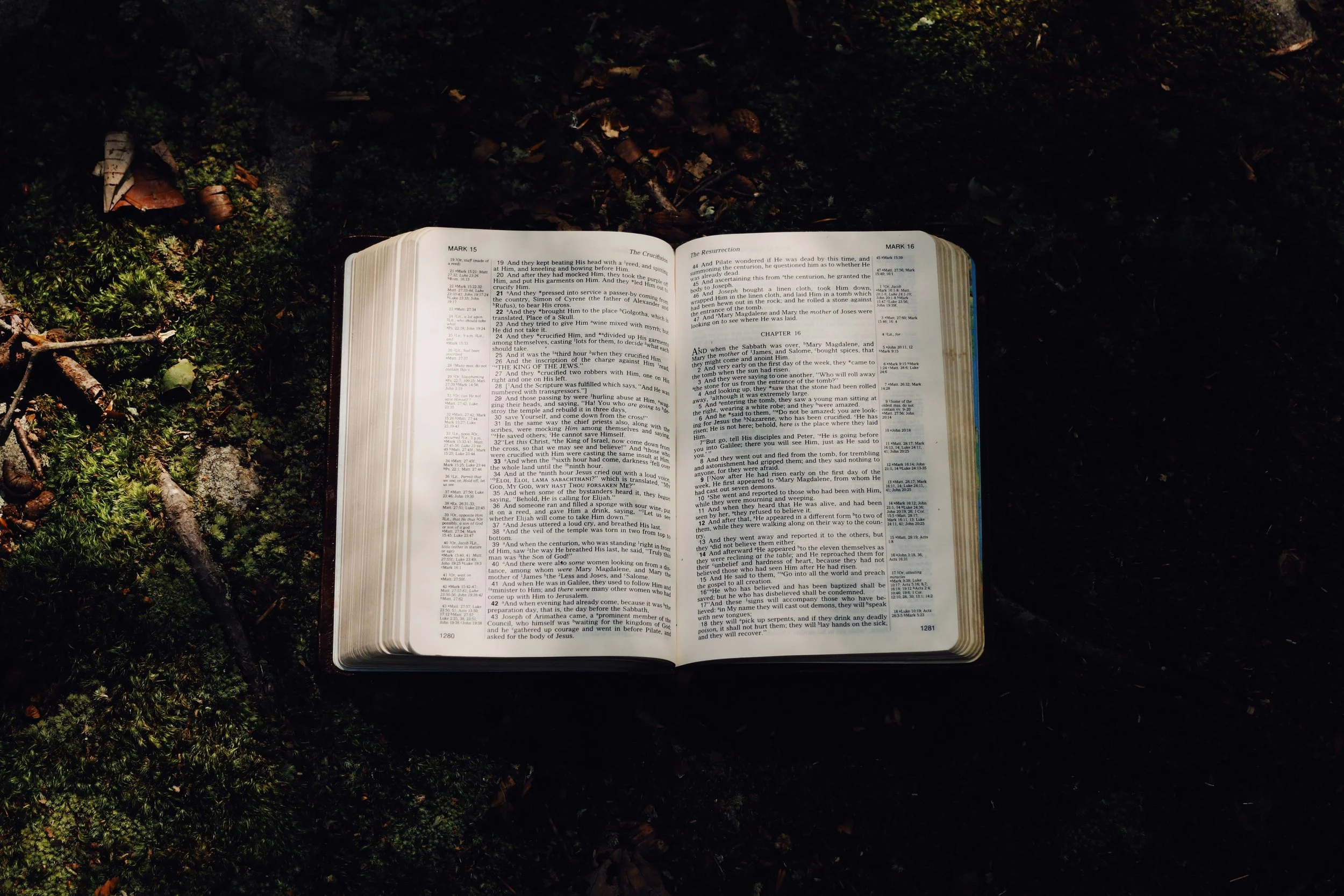
“I don’t understand the Bible.”
Fair enough.
It’s long. 66 books. Written at different times to different people.
You may wonder if it’s worth it. Should you just skip forward to the New Testament? Read the readable parts and leave behind the rest?
You could. But you would be missing out!
These 66 books tell one story.
The true story of a good God.
It was written to answer questions you and I have. Questions humans have always had.
Questions like, “Is there a God?” and “Has he spoken?”¹
We find the answers in the first sentence of book one:
In the beginning, God…²
The God of the universe wants to be known.
And he wants us to know the truth about our most important questions.
Why is there something instead of nothing?
How did it all begin?
How do I know what’s true?
What is good?
Who am I?
What is the point of it all?
Why is this happening?
Is there any hope?
What happens when I die?
The radical claim of the Bible is that we can know the truth about these questions.
The truth is wonderful, powerful and freeing if we will embrace it.
But it is also hard and complex, and it will require grit.
Here are three practical ways to stick with it:
One, read the whole Bible.
For some, this will look like reading through the Bible in a year. There are several excellent versions available on YouVersion.
For others, this will look like reading through the entire Bible in three months. It is more doable than you think, especially if you listen to it instead of reading it. Listening is not cheating nor shortchanging. In fact, for much of Christian history, most believers heard the Bible being read instead of reading it themselves. Join the tradition!
For others still, it will look like buying a children’s Bible and reading it cover to cover in one sitting. Don’t despise this method! Someone went to all the hard work of curating the most important stories for you to master and distilling the theological truths into ordinary language. These are masterpieces.
Whichever your method, the goal is to capture the whole biblical story. The individual chapters make far more sense placed against the backdrop of the biblical narrative. This alone will help you stick with it!
Two, dialogue with your Bible.
After graduating with a degree in philosophy, I had a long list of questions about the Bible. In particular, I had questions about the Trinity and questions about hell. I used to record specific Bible verses I came across that spoke to these topics in the back of my Bible. Verse by verse, I began to piece together answers to my most challenging questions.
Grab a pen, record your questions, record your reactions. The Bible is living and active; treat it as such. Prayer and Bible reading have always gone hand in hand. When you open your Bible, you are reading the words of God. He wants to talk with you. He invites you to talk back. You are not alone in seeking to understand the Bible. The Holy Spirit is your guide as you stick with it!
Three, compare the alternatives.
As you read, keep taking the pulse of your culture. Watch the reel, turn on the TV, ask your agnostic professor questions, be curious about other faiths. This is controversial advice, but good advice nontheless. Too often, we don’t treasure Scripture properly because we disconnect it from ordinary life. It’s the Bible, and it doesn’t seem to relate to the world in the same way Instagram, TV, or a professor does.
The Bible is holy. It is separate. It is of a different authority and value. But it has the same subject matter as every reel, TV show, philosophical musing, or religious idea. So take in the alternative ideas and contrast them with the Bible.
There’s this beautiful story in John where Jesus says something hard and many people stop following him.
Jesus looks at his disciples and says, “You do not want to leave too, do you?”
Peter doesn’t condemn or balk at the people who left. He heard the hard saying too. He held everyone’s response in one hand and the teachings of Jesus in the other and concluded—
“Lord, to whom shall we go? You have the words of eternal life.”
Sometimes, the best way to stick with it is simply to consider the alternatives. The Bible contains much that is hard. It will cost time, effort, and comfort. There will be moments, like Peter, where you are confused, even aghast.
But this book contains the words of eternal life.
If you engage your heart and give this book the fullness of your mind and strength, it will not return back void.
It is worth it.
All Scripture is God-breathed and is useful for teaching, rebuking, correcting and training in righteousness, so that the servant of God may be thoroughly equipped for every good work.
—2 Timothy 3:16-17
To the Jews who had believed him, Jesus said, “If you hold to my teaching, you are really my disciples. Then you will know the truth, and the truth will set you free.”
—John 8:31-32
The answers to “Is there a God?” and “Has he spoken?” alter everything about how you see the world and live your life. These questions are beautifully and compellingly answered in “He Is There, and He Is Not Silent” by Francis Schaeffer.
October 10, 2026 | Photo by Kevin Wright on Unsplash
